


NDPS Criminal Lawyer in Navi Mumbai
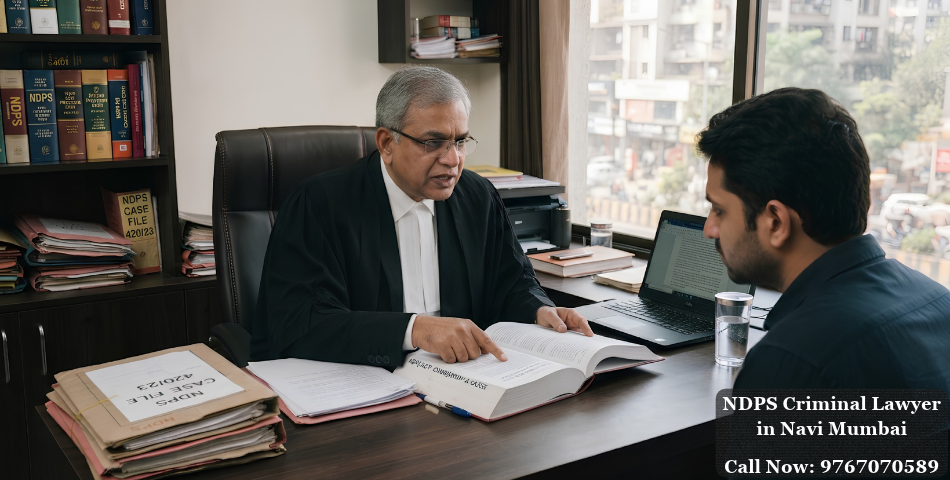





NDPS Criminal Lawyer in Navi Mumbai | Law Mantri
A narcotics arrest can upend a household overnight, leaving everyone unsure about bail, custody and what the next hearing will bring. At such a moment, a dependable NDPS Criminal Lawyer in Navi Mumbai helps you grasp the charges under the Narcotic Drugs and Psychotropic Substances Act and respond with a calm, lawful plan.
Law Mantri is an online legal platform that lets families and individuals reach listed lawyers with roughly 5 to 10+ years of courtroom experience in different locations. Our advocates are familiar with drug-law prosecutions, remand hearings, bail pleas and full trials before the Special Court.
People in Vashi, Nerul, Kharghar, Panvel and nearby areas can share their case papers with our team and talk through the next step. Acting early protects your rights, preserves useful evidence and keeps every legal option open for the days ahead.
About Us
Law Mantri brings accused persons, worried families and defence-minded advocates together on one reliable platform. Once a narcotics case is registered, we help you find a NDPS defence lawyer in Navi Mumbai whose experience fits your situation, whether it concerns alleged possession, transport or commercial dealing.
We read the FIR, panchnama and seizure papers first, so every piece of advice reflects what is actually on record.
Support commonly sought through our network:
- Anticipatory and regular bail applications in drug-related cases.
- Challenges to search, seizure, sampling and chain of custody.
- Defence before the Special Court during a full NDPS trial.
- Appeals, revision and quashing petitions before the High Court.
Reaching out early often makes the biggest difference. Send us the details you hold and our team will point you toward a suitable advocate for your case.
Understanding Narcotics Charges: What the NDPS Act Actually Covers
The NDPS Act is the central statute that regulates the possession, sale, transport, manufacture and consumption of narcotic drugs and psychotropic substances across India.
Punishment depends heavily on the substance involved and the quantity recovered, which the law sorts into small, intermediate and commercial categories.
That classification matters a great deal, because tougher bail conditions and longer minimum sentences usually attach to commercial-quantity allegations.
An accusation is not a conviction. Prosecutors must respect the procedural safeguards written into the Act, and any departure from them can open up strong defence arguments.
Allegations that often appear in NDPS cases:
- Alleged possession of a small or intermediate quantity.
- Allegations of holding material for sale or transport.
- Recovery said to meet the commercial quantity threshold.
- Arrest following the interception of a courier or parcel.
- Cases leaning on a co-accused person’s statement.
- Claims of conspiracy or abetment under the Act.
- Alleged consumption, with or without any recovery.
- Recovery from a vehicle, flat or shared premises.
- Seizure carried out by customs, DRI or the local police.
- Repeat-offence allegations that invite enhanced punishment.
The best strategy depends on the agency involved, the quantity recovered, the stage the case has reached and how carefully the recovery was documented.
Everyday Drug Cases That Reach Defence Lawyers Across Navi Mumbai
Residents of Vashi, Belapur, Kharghar and Panvel often meet comparable situations after a raid or an interception. Knowing the pattern helps you decide when an NDPS criminal lawyer should step in and review the papers.
Small-Quantity Possession and Personal-Use Claims
Many arrests involve a modest recovery that the police describe as meant for personal use or for sale.
Courts then look closely at the exact weight, the manner of sampling and whether the allegation truly matches the quantity category.
Where the accused is a user, the law also contains provisions on treatment and limited protection, which a lawyer can raise at the proper stage.
Commercial Quantity and Strict Bail Conditions
Commercial-quantity cases attract the harshest rules, including a demanding test that the court applies before granting bail.
Defence work often centres on how the contraband was weighed, whether purity reports exist, whether samples were mixed and where the recovery story has gaps.
Seizure memos and forensic reports frequently decide whether release becomes a realistic possibility.
Search and Seizure Lapses Worth Challenging
A solid defence often begins where the investigating team strayed from the procedure the law requires.
Frequent points of challenge:
- Search carried out without the required notice or independent witnesses.
- Personal search done without offering a gazetted officer or magistrate.
- Delay in sending seized samples to the forensic laboratory.
- Breaks in the chain of custody of the seized material.
- Missing or inconsistent inventory and sampling records.
Arrest, Remand and Custody Disputes
Arrest memos, remand applications and custody periods are all examined to see whether the law was followed.
Problems may include delay in producing the accused before a magistrate, denial of access to a lawyer or vague grounds of arrest.
A well-timed objection can influence bail and even the direction of the investigation.
From Arrest to Verdict: The Journey of an NDPS Case Through the Courts
After a seizure, the accused is produced before a magistrate for remand, and the matter later proceeds before the Special Court that handles NDPS offences.
The investigation ends with a chargesheet, and the law sets time limits within which it must be filed, failing which an accused may claim default bail.
During trial, seizure officers and independent witnesses are examined and cross-examined, while forensic reports are tested against the recovery story.
Bail may be sought at several stages, but in serious-quantity cases the court must be satisfied about specific statutory conditions, so every plea needs careful preparation. Adverse orders can be challenged before the High Court, and current rules and time limits should always be confirmed with a lawyer.
Contact Us
Picking the Right Remedy: Bail, Quashing or a Full Defence at Trial
Choosing the wrong remedy can waste precious time, so the first question is always which stage the case has reached.
Some people need protection before an arrest, others need release after one, and some need to attack the case itself, with each path carrying its own court and approach.
Remedies before and after arrest:
- Anticipatory bail where an arrest in an NDPS case is feared.
- Regular bail before the Special Court after arrest.
- Default bail when the investigation outruns the permitted period.
- Interim relief while a main plea remains pending.
- Requests for medical attention or treatment during custody.
Remedies during trial and beyond:
- Applications for discharge where the charge lacks a firm basis.
- Cross-examination of seizure officers and panch witnesses.
- Challenges to forensic reports and sampling procedure.
- Appeals against conviction before the High Court.
- Revision against adverse procedural or interim orders.
- Petitions seeking quashing where the law permits it.
A remedy succeeds when it rests on the record, because unhappiness with an outcome is never a ground by itself. Strong pleas point to a procedural lapse, a gap in evidence or a breach of statutory safeguards.
An experienced criminal lawyer can compare your papers against these routes and tell you which step is the most urgent.
Papers and Facts to Gather Before You Meet an NDPS Lawyer
- FIR and arrest papers: Keep copies of the FIR, arrest memo and grounds of arrest, since they record the allegations and the timing.
-
Seizure documents: Gather the panchnama, seizure memo and inventory prepared at the time of the recovery.
-
Notices and authorisations: Note any notice, search authorisation or written intimation given before or after the search.
- Remand and court orders: Preserve every remand order, bail order and diary entry passed in the case so far.
-
Forensic and sampling records: Collect sampling reports, laboratory letters and any note of how and when samples were sent.
-
Identity and address proof: Keep documents that show the accused person’s background and residence, which support bail submissions.
-
Phone, travel and parcel records: Save tickets, delivery details, call records and messages that explain the accused person’s movements.
-
Family, work and surety details: Prepare particulars of family members, employment and possible sureties for bail hearings.
-
Timeline of events: Write down a dated sequence from the first contact with officers to the arrest and production before the magistrate.
-
Urgent relief needs: Decide early whether bail, release from custody or medical care must be requested at the very first hearing.
How Defence Counsel Builds Your Case From the First Hearing Onward
An NDPS defence rests on seizure papers, witness accounts, forensic reports and timelines that are often scattered across several agencies.
Managing such a file demands command of drug-law procedure, the rules of evidence and the limits courts place on granting bail.
Studying the FIR and the Recovery Story
A NDPS Criminal Lawyer in Navi Mumbai begins by reading the FIR and seizure papers line by line and comparing them with witness accounts and recorded timings.
The goal is to test whether officers followed every safeguard, recorded the recovery faithfully and explained any delay in a convincing way.
Arranging Records and Supporting Evidence
Defence work depends heavily on whatever the prosecution places before the court.
Useful material may include the panchnama, call records, CCTV footage, travel proof, laboratory reports and the accused person’s own documents.
A lawyer arranges these into a tidy file that the judge can follow without confusion.
Preparing a Focused Bail Application
A strong bail plea states the facts briefly and highlights each weakness in the case against the accused.
It also deals with the quantity involved, the accused person’s background and the conditions the court may reasonably impose.
Seeking Interim Protection and Relief
Where an arrest is feared or custody has already begun, a lawyer can advise on anticipatory bail, interim relief or a request for an urgent hearing.
Representing You at Every Hearing
From the first remand hearing to final arguments, defence counsel questions witnesses, answers the prosecution and presents your case before the Special Court and the High Court.
Experience
Law Mantri introduces clients to advocates with about 5 to 10+ years in criminal defence practice, including bail work and trials before courts across Maharashtra. Seeing many narcotics matters move through remand, bail hearings and trial teaches these lawyers which defences gain traction, how prosecutors build their cases and where avoidable delays arise.
Expertise
Listed advocates handle anticipatory and regular bail, challenges to search and sampling, forensic evidence disputes and the cross-examination of seizure officers. Their ability to draft precise pleas and argue at the right moment is often what decides whether a client wins relief at the bail stage or at trial.
Authoritativeness
Law Mantri gathers lawyers from varied practice areas and explains courts, procedures and remedies in simple language. Anyone searching for a criminal lawyer for NDPS cases in Navi Mumbai will find the search easier here, and readers can also confirm basic ideas through public reference sources.
Trustworthiness
Please verify a lawyer’s enrolment, experience and fee terms before engaging anyone, and treat this page as general information rather than legal advice. Results depend on the facts, the evidence and the court, so no outcome can ever be guaranteed.
Frequently Asked Question(FAQs)
Q1. What does the NDPS Act deal with, and who can be charged under it?
Ans: It is the Indian law governing narcotic drugs and psychotropic substances, and it can apply to anyone accused of possessing, selling, transporting, producing or consuming controlled substances.
Q2. Is bail possible in an NDPS case?
Ans: Yes, but the approach depends on the quantity involved, and commercial-quantity cases face stricter conditions, so the bail plea must be prepared with great care.
Q3. What should a family do if the police or a narcotics agency arrests a relative?
Ans: Stay calm, collect the arrest and seizure papers, avoid signing anything you do not understand and contact a criminal lawyer without delay.
Q4. Can a statement made to narcotics officers be used against the accused?
Ans: Courts treat such statements with caution and usually look for independent proof, but the exact position depends on the facts, so ask your lawyer.
Q5. How can an NDPS criminal lawyer in Navi Mumbai assist me?
Ans: A lawyer studies the case file, questions procedural lapses, files bail applications and argues for you before the trial court and the High Court.
Contact Us
Send your FIR, remand order and other case papers to our team to talk through your options with an advocate in Navi Mumbai, and ask about urgent hearing dates before you take any step.
- 📞 Contact: 9767070589
- ✉️ Email: support@lawmantri.in
- 🌐 Website: https://lawmantri.in/
- 📍 Address: C/03, Philips Chsl, Philips Complex, Bhabola Naka, Papdy Road, Vasai West, Mumbai, Maharashtra 401207
Conclusion
A narcotics case is serious, yet it does not have to define your future. Whether you face a first-time possession charge or a commercial-quantity allegation, a quick response and a well-prepared record can safeguard your liberty, so consider speaking with a trusted NDPS lawyer in Navi Mumbai before your next hearing arrives.
Law Mantri is an online meeting point for individuals and businesses who wish to reach listed lawyers with about 5 to 10+ years of experience across locations. Help is available in criminal defence, bail, property, corporate, family, divorce and arbitration matters.

“Know someone who could use this guide? Pass it along!”