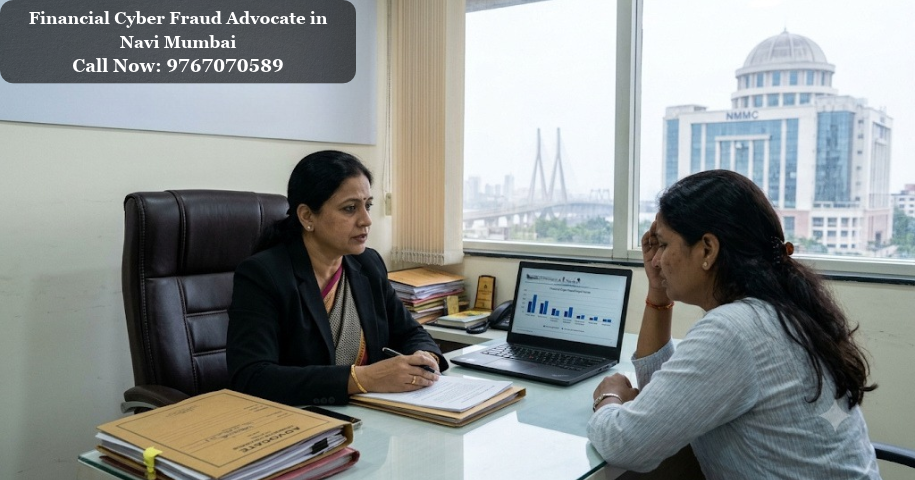



Cyber Fraud Criminal Lawyer Advocate in Navi Mumbai






Cyber Fraud Criminal Lawyer Advocate in Navi Mumbai | Expert Legal Support for Cybercrime and Online Financial Fraud Cases
Cyber fraud has become a serious concern for individuals, families, professionals, business owners and companies across Navi Mumbai. With the increasing use of UPI payments, internet banking, mobile applications, digital wallets, credit cards, online shopping platforms and investment websites, cybercriminals are finding new ways to cheat people and steal money. From phishing messages and fake customer care numbers to identity theft, OTP fraud, online investment scams and business email compromise, cybercrime can cause financial losses and emotional stress. If you are facing such a situation, consulting an experienced Cyber Fraud Criminal Lawyer Advocate in Navi Mumbai can help you understand your legal rights, take appropriate action and protect your interests.
Lawmantri is a platform where individuals can connect with experienced lawyers from different locations, including legal professionals with approximately 5–10+ years of experience in their respective practice areas. The platform helps people seek legal guidance for cybercrime matters, criminal cases, financial disputes, corporate matters and other legal concerns.
About Us
Lawmantri is a legal platform designed to help individuals, families, professionals and businesses connect with experienced lawyers for different legal requirements. Finding the right lawyer can be challenging, especially when someone is dealing with an urgent cybercrime complaint, financial fraud, police investigation or criminal allegation. People often need clear information about their legal options before deciding what steps to take.
Lawmantri helps bridge this gap by listing experienced lawyers from different locations and legal practice areas. The listed legal professionals include qualified lawyers with approximately 5–10+ years of experience, depending on their individual backgrounds and areas of legal practice.
Legal Guidance for Different Requirements
Lawmantri provides access to lawyers associated with different legal practice areas, such as:
- Cybercrime and online financial fraud.
- Criminal defence and criminal trials.
- Bail and anticipatory bail matters.
- Personal and family legal disputes.
- Divorce and matrimonial matters.
- Child custody and guardianship disputes.
- Property disputes and ownership-related matters.
- Corporate disputes and commercial litigation.
- Arbitration and alternative dispute resolution.
- Financial fraud and documentation-related disputes.
Understanding Cyber Fraud and Its Legal Consequences in Navi Mumbai
Cyber fraud refers to dishonest activities carried out through computers, smartphones, digital communication platforms, online banking systems or the internet to obtain money, personal information or other benefits unlawfully.
Unlike traditional financial fraud, cybercrime can happen within seconds and may involve criminals operating from different cities or countries. Sometimes, victims do not even realise that they have been cheated until they receive a bank notification or discover an unauthorised transaction.
Navi Mumbai has a growing population of working professionals, entrepreneurs, students, business owners and digital banking users. As online transactions become part of everyday life, awareness of cybercrime and available legal remedies becomes increasingly important.
Common types of cyber fraud include:
- UPI Payment Fraud: Fraudsters trick people into approving payment requests or sharing sensitive transaction information.
- OTP and Banking Fraud: Criminals use deceptive calls or messages to obtain OTPs, passwords and banking credentials.
- Phishing Attacks: Fake emails, websites and messages are used to collect personal and financial information.
- Online Investment Scams: Fraudsters promise unrealistic returns through fake trading applications, cryptocurrency schemes or investment platforms.
- Identity Theft: Someone uses another person’s personal details, documents or digital identity without lawful authority.
- Credit and Debit Card Fraud: Unauthorised card transactions are carried out using stolen card information.
- Social Media Fraud: Fake profiles, impersonation, blackmail and deceptive online communications are used to cheat individuals.
- Job and Employment Scams: Victims are asked to pay registration fees, security deposits or training charges for fake employment opportunities.
- Business Email Compromise: Fraudsters impersonate business executives, suppliers or employees to redirect payments.
- Online Shopping Fraud: Fake sellers collect payments without delivering the promised products or services.
- Digital Loan App Fraud: Some fraudulent applications misuse personal information, impose deceptive charges or threaten borrowers.
- Remote Access App Fraud: Criminals manipulate victims into installing applications that provide unauthorised access to devices or sensitive information.
Important Cyber Fraud Laws Under the Bharatiya Nyaya Sanhita (BNS), 2023
The Bharatiya Nyaya Sanhita (BNS), 2023, introduced a new framework for criminal offences in India and came into effect on 1 July 2024. It replaced the Indian Penal Code (IPC), 1860, for offences governed by the new law.
Cyber fraud cases may involve cheating, dishonest inducement, impersonation, forgery and other criminal activities. Depending on the facts, provisions of the BNS may apply along with the Information Technology Act, 2000.
It is important to understand that not every online payment dispute automatically becomes a criminal offence. The nature of the deception, intention, evidence, financial transaction and conduct of the people involved must be examined.
Information Technology Act, 2000 | Important Sections for Cyber Fraud
The Information Technology Act, 2000, is an important law for dealing with offences involving computers, communication devices, electronic information and digital systems.
In many cyber fraud matters, the Information Technology Act and the Bharatiya Nyaya Sanhita may need to be considered together.
Section 43 – Unauthorised Access and Damage to Computer Systems
Section 43 deals with certain unauthorised activities involving computer systems and networks.
These activities may include unauthorised access, downloading information, introducing malicious software, damaging computer systems or disrupting services.
The provision provides for compensation in specified circumstances.
Section 66 – Computer-Related Offences
Section 66 makes certain acts covered under Section 43 criminal offences when committed dishonestly or fraudulently.
It can become relevant in cases involving unauthorised computer access, data manipulation and other dishonest computer-related activities.
The punishment may extend to three years of imprisonment, a fine of up to ₹5 lakh or both.
Section 66C – Identity Theft
Section 66C deals with identity theft.
It may apply when someone fraudulently or dishonestly uses another person’s electronic signature, password or other unique identification feature.
Contact Us
What Should You Do Immediately After Becoming a Victim of Cyber Fraud?
Time is important when dealing with online financial fraud. Quick reporting can help authorities and financial institutions take appropriate steps to examine and potentially restrict suspicious transactions.
If you have lost money through UPI fraud, internet banking fraud, credit card fraud or another online scam, consider taking the following steps.
Contact Your Bank Immediately
Inform your bank about the unauthorised transaction.
Request that the bank examine the transaction and take appropriate steps under its applicable procedures. Ask whether the relevant account, card, UPI facility or internet banking access can be blocked or secured.
Keep the complaint reference number for future communication.
File an Online Cybercrime Complaint
The National Cyber Crime Reporting Portal allows citizens to report different types of cybercrime.
For financial cyber fraud, you can also call the national cybercrime helpline at 1930.
Provide accurate details, including the transaction date, amount, bank information and available transaction references.
Preserve Digital Evidence
Do not delete important messages, emails, payment receipts or call records.
Preserve:
- Bank transaction statements.
- UPI transaction IDs.
- SMS alerts.
- WhatsApp conversations.
- Email communications.
- Fraudulent website links.
File a Police Complaint
Depending on the circumstances, a complaint may be submitted to the appropriate police station or cybercrime police authorities.
The complaint should explain the incident in chronological order and include supporting documents.
How Does a Cyber Fraud Criminal Lawyer Advocate in Navi Mumbai Help?
Cyber fraud matters often involve more than filing a complaint. They may require legal knowledge, careful document examination, understanding of electronic evidence and communication with different authorities.
A Cyber Fraud Criminal Lawyer Advocate in Navi Mumbai can provide assistance according to the person’s role in the case.
Assistance for Cyber Fraud Victims
For a person who has lost money, legal assistance may include:
- Understanding the nature of the fraud.
- Preparing a detailed complaint.
- Identifying potentially relevant BNS and IT Act provisions.
- Organising transaction-related documents.
- Assisting with police complaint procedures.
Legal Representation for Accused Individuals
A person accused of cyber fraud also has legal rights.
An allegation does not automatically establish guilt. The prosecution must prove the relevant criminal charges through legally admissible evidence.
Assistance During Police Investigation
Cybercrime investigations may involve digital devices, mobile numbers, bank accounts, IP information, electronic communications and financial transaction records.
A lawyer can explain the investigation process, advise the client about lawful cooperation and help ensure that the person’s legal rights are respected.
Court Representation
If a cyber fraud matter proceeds to court, appropriate legal representation becomes important.
The lawyer may assist with pleadings, applications, evidence-related issues, bail proceedings, arguments and other stages of the case, depending on the instructions and nature of the matter.
Different Types of Cyber Fraud Cases Handled Through Legal Support
Cybercrime can affect people in different ways. Understanding the type of fraud helps identify the evidence and legal issues that need attention.
UPI Fraud and QR Code Scams
UPI has made digital payments convenient, but fraudsters sometimes misuse people’s lack of awareness.
A common method involves sending a payment request and misleading the victim into approving it. Some criminals also use fake QR codes or pretend to offer refunds.
People should remember that receiving money through UPI generally does not require entering a UPI PIN. A PIN is used to authorise certain transactions.
Legal assistance may involve examining transaction details, preparing complaints and identifying the appropriate authorities.
Online Investment and Trading Fraud
Investment fraud may involve fake trading platforms, manipulated dashboards, fraudulent stock market tips or unrealistic return promises.
Victims may initially see fake profits on an application and later be asked to deposit more money to withdraw their funds.
Important evidence may include investment advertisements, payment records, bank details, chats, account statements and website information.
A lawyer can help victims understand the possible criminal and financial remedies.
Phishing and OTP Fraud
Phishing involves misleading individuals into sharing sensitive information through fake websites, emails, SMS messages or phone calls.
Fraudsters may pretend to be bank employees, delivery agents or customer support representatives.
If banking information is compromised, victims should contact their bank immediately, secure their accounts and report the incident.
Importance of Digital Evidence in Cyber Fraud Cases
Digital evidence is often central to cybercrime investigations.
Unlike many traditional disputes, cyber fraud cases may depend heavily on electronic records that show how communication occurred, where transactions were made and how an account or device was used.
The quality and authenticity of the evidence can influence the investigation and court proceedings.
Bharatiya Sakshya Adhiniyam, 2023 and Electronic Records
The Bharatiya Sakshya Adhiniyam (BSA), 2023, replaced the Indian Evidence Act, 1872, and came into force on 1 July 2024.
It contains provisions dealing with electronic and digital records.
Section 61 – Electronic or Digital Records
Section 61 recognises electronic or digital records as evidence, subject to the requirements of the Act.
Section 62 – Special Provisions Relating to Electronic Records
Section 62 states that the contents of electronic records may be proved according to Section 63.
Section 63 – Admissibility of Electronic Records
Section 63 deals with the conditions for admissibility of electronic records, including relevant requirements concerning computer outputs.
This is important when digital documents, screenshots, recordings or other electronic information are presented during legal proceedings
Experience
Practical understanding of common cyber fraud situations, including UPI scams, identity theft, phishing attacks, online investment fraud and unauthorised banking transactions.
Expertise
Explanation of relevant legal provisions under the Bharatiya Nyaya Sanhita (BNS), Information Technology Act, Bharatiya Nagarik Suraksha Sanhita (BNSS) and Bharatiya Sakshya Adhiniyam (BSA), including their application to cybercrime offences, digital evidence and criminal legal proceedings.
Authoritativeness
Reference to Indian legislation and official legal information resources to help readers verify important legal provisions, understand applicable laws and access reliable legal guidance.
Trustworthiness
Clear legal explanations, realistic expectations, no guaranteed financial recovery claims and recognition that legal outcomes depend on the facts and evidence of each case.
FAQ
Q1. What does a Cyber Fraud Criminal Lawyer in Navi Mumbai do?
Ans: A lawyer helps with cybercrime complaints, online fraud cases, digital evidence, criminal defence and court proceedings.
Q2. Which BNS section applies to cyber fraud?
Ans: Section 318 deals with cheating, while Section 319 deals with cheating by personation under BNS.
Q3. Which laws apply to cyber fraud cases in India?
Ans: Depending on the offence, provisions of the Information Technology Act, 2000, and relevant sections of the Bharatiya Nyaya Sanhita (BNS), 2023, may apply.
Q4. Can a lawyer help recover money lost in UPI fraud?
Ans: A lawyer can guide you through complaint procedures, legal remedies and communication with the concerned authorities. Recovery is not guaranteed.
Q5. How can I consult a cyber fraud advocate in Navi Mumbai?
Ans: Contact Lawmantri at 9767070589 or visit https://lawmantri.in/ for legal assistance.
Contact Us
Looking for a Cyber Fraud Criminal Lawyer Advocate in Vasai?
- 📞 Contact: 9767070589
- ✉️ Email: support@lawmantri.in
- 🌐 Website: https://lawmantri.in/
- 📍 Address: C/03, Philips Chsl, Philips Complex, Bhabola Naka, Papdy Road, Vasai West, Mumbai, Maharashtra 401207
Conclusion
Cyber fraud can affect anyone, regardless of age, profession or financial background. A single fraudulent call, suspicious payment request, fake investment opportunity or compromised digital account can lead to serious financial and legal problems. Understanding the applicable Indian cybercrime laws, reporting cyber fraud incidents quickly, preserving digital evidence and seeking appropriate legal guidance are important steps when dealing with cybercrime matters.
The Bharatiya Nyaya Sanhita (BNS), Information Technology Act, Bharatiya Nagarik Suraksha Sanhita (BNSS) and Bharatiya Sakshya Adhiniyam (BSA) provide important Indian legal frameworks for dealing with different aspects of cyber fraud and criminal proceedings. Whether you are a victim of online financial fraud, facing identity theft, dealing with a suspicious bank transaction or responding to a cybercrime allegation, obtaining case-specific legal advice can help you understand the available legal options.

“Don’t forget to share this post!”